
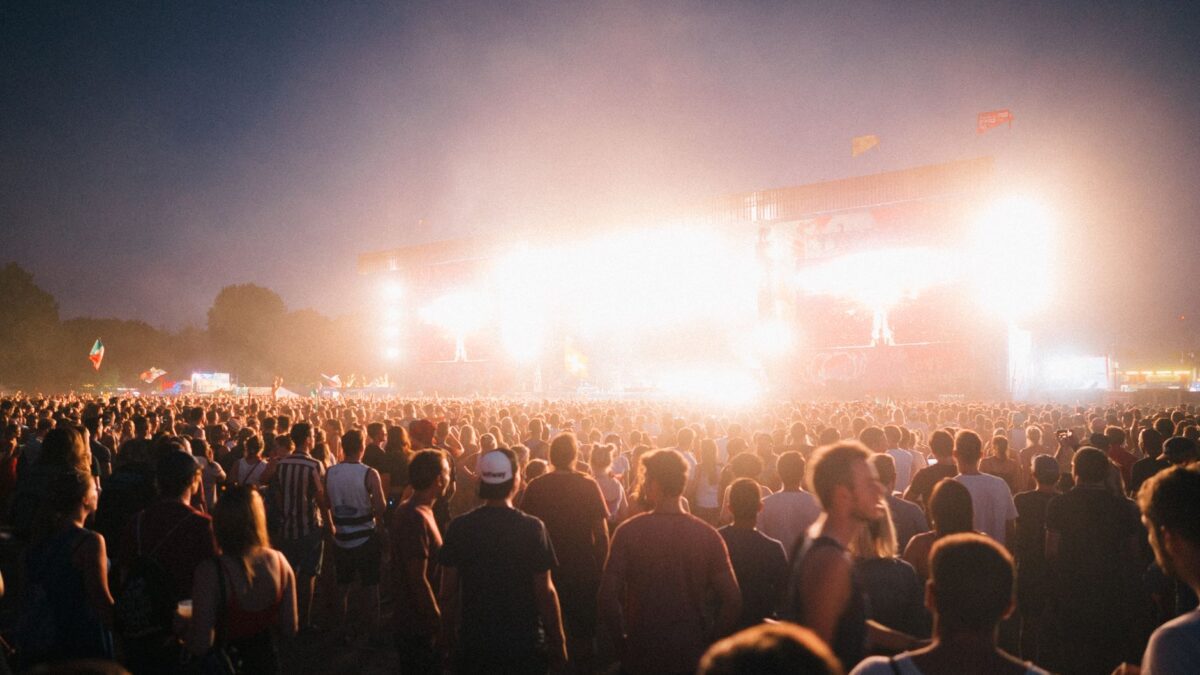
A music festival survival guide gives first-timers a plan for staying safe, comfortable, and energized across long days of multiple stages, big crowds, and unpredictable weather.
A festival is a marathon, not a single show. You may walk miles, stand in the sun for hours, and bounce between stages from noon until midnight. Get the planning right and it turns into the best weekend of your year. Skip it and you end up with a sunburned blur instead of memories. Here is how first-timers survive their first festival and actually enjoy it.
Festivals Keep Getting Bigger
Festival culture keeps expanding alongside the broader live industry. Live Nation reported hosting more than 145 million fans across its 2023 events, with festivals a major piece of that total. Pollstar’s 2023 year-end report logged a record $9.17 billion from the top 100 tours, and that demand has carried into a packed 2026 festival season. Bigger crowds mean more planning pays off.
Before You Go
- Study the map and schedule. Note stage locations and any must-see set clashes ahead of time.
- Plan your transport. Know how you are getting in and, more importantly, out at the end of the night.
- Set a meeting point. Cell service often fails, so agree on a landmark with your group.
- Charge everything. Arrive with a full phone battery and a charged power bank.
What to Pack
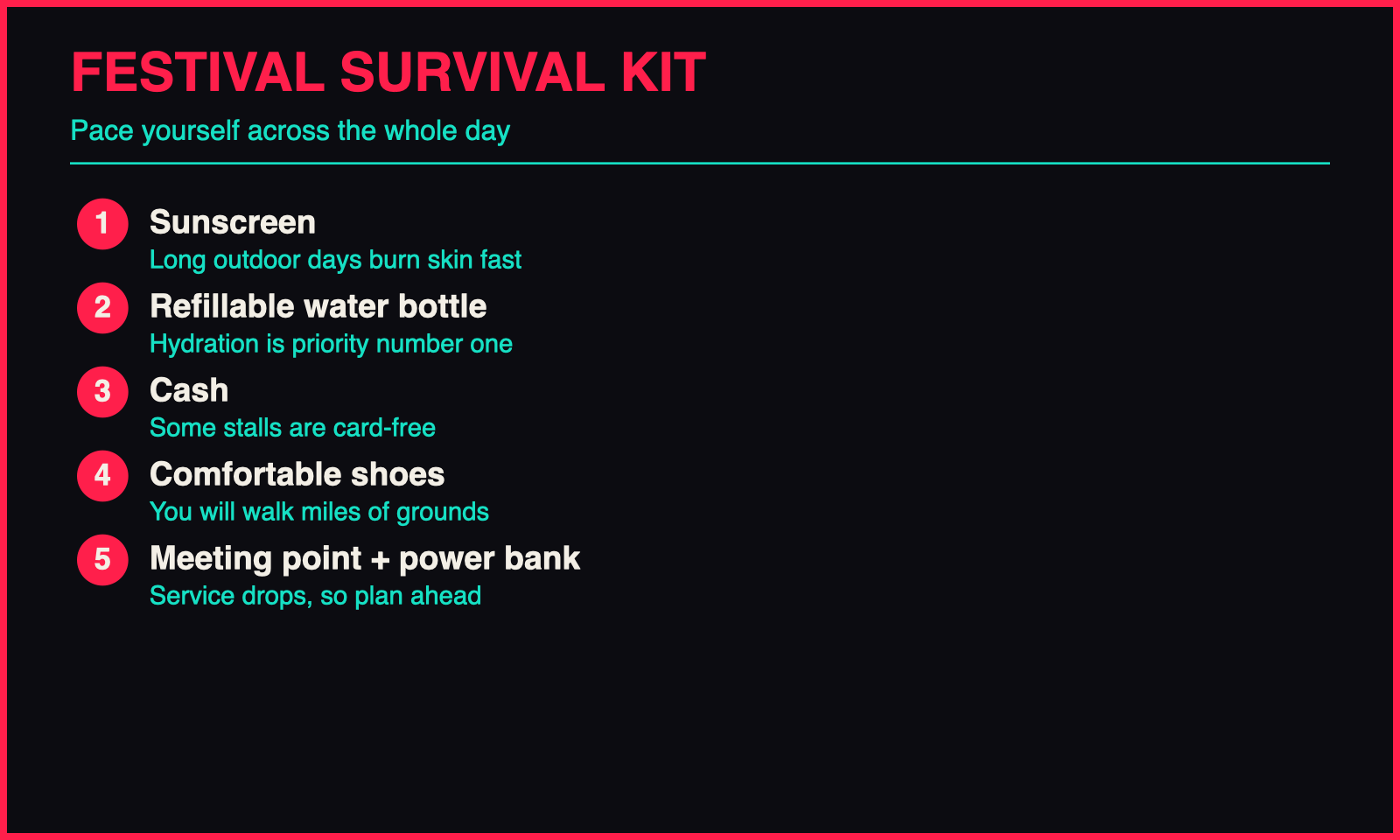
Festivals demand more gear than a single club show. Build on our general concert packing checklist and add festival-specific items, including something for your ears, since a full day of stages adds up to a lot more noise exposure than one set.
| Item | Why You Need It |
|---|---|
| Sunscreen | Long days outdoors burn skin fast |
| Refillable water bottle | Hydration is the number-one priority |
| Cash | Some vendors and stalls are card-free |
| Comfortable shoes | You will walk miles across the grounds |
| Light rain layer | Outdoor weather can turn quickly |
Multi-day lineups mean multi-day noise exposure, so it is worth packing a pair of high-fidelity earplugs along with your rain layer. Your ears will thank you by the closing set. What you wear matters too, so check our guide on what to wear to a rock concert and dress in breathable layers.
Surviving the Day
Hydration and pacing are everything. Drink water constantly, eat real meals, and find shade between sets. Do not try to catch every act, since racing across a huge site all day will burn you out by evening. Build in breaks. If you head to the front for a big act, expect heavy crowds, and our guide to mosh pit etiquette explains how to stay safe in the surge.
Making the Most of the Lineup
Festival sets are often shorter than a headliner’s full concert, so bands pack them with hits. Understanding how setlists are made helps you predict the big moments and decide which sets are worth pushing to the front for. If this is your very first live event of any kind, start with our broader concert survival guide first.
Frequently Asked Questions
What should I bring to a music festival?
Pack sunscreen, a refillable water bottle, cash, comfortable shoes, a charged power bank, a light rain layer, and a pair of earplugs for the loud sets. Keep it all in a small, allowed bag.
How do I not lose my friends at a festival?
Agree on a clear meeting landmark before you split up, since cell service often fails in big crowds. Check in at set times throughout the day.
How do I stay safe in festival heat?
Drink water constantly, seek shade between sets, wear sunscreen and a hat, and eat real meals. If you feel faint, find shade and alert staff or medics.
Should I try to see every band?
No. Racing across the grounds all day leads to burnout. Pick your priorities, build in rest, and leave room to discover acts by chance.
The Bottom Line
A festival rewards preparation. Study the map, pack smart, hydrate relentlessly, and pace yourself across the day. Do those things and you will make it to the final headliner with energy to spare, which is exactly how a great festival should end.