

Pop-punk is a subgenre of punk rock that fuses the speed and three-chord attack of bands like the Ramones with the polished melodies and big choruses of pop. It broke out of the mid-1990s underground with Green Day and The Offspring, and it still runs on fast tempos, palm-muted guitars, and anthems about heartbreak, hometowns and growing up.
If punk gave teenagers permission to be loud, pop-punk gave them permission to be loud and catchy at the same time. From skate parks in California to sold-out arenas, the genre has reinvented itself across four decades while keeping the same beating heart: short songs, palm-muted guitars, and lyrics fans scream back word for word. Here’s where it came from, who defined it, and why it keeps coming back around.
What pop-punk actually is
Pop-punk takes the three-chord blueprint of 1970s punk and sands down the edges. The tempo stays fast, typically 160 to 200 beats per minute, while the songs are built around vocal melodies polished enough for pop radio. Expect distorted guitars, driving drums, and a singalong chorus that lands within the first ninety seconds. Lyrically, the genre lives in adolescence: crushes, boredom, suburbia, and the ache of leaving your hometown behind.
That balance between aggression and sweetness is the whole trick. Go too poppy and the songs lose their bite; go too punk and the hooks disappear. The best pop-punk bands walk that line on purpose, and our list of the best pop-punk songs of all time is a strong place to hear it in action.
The 1990s: pop-punk breaks through
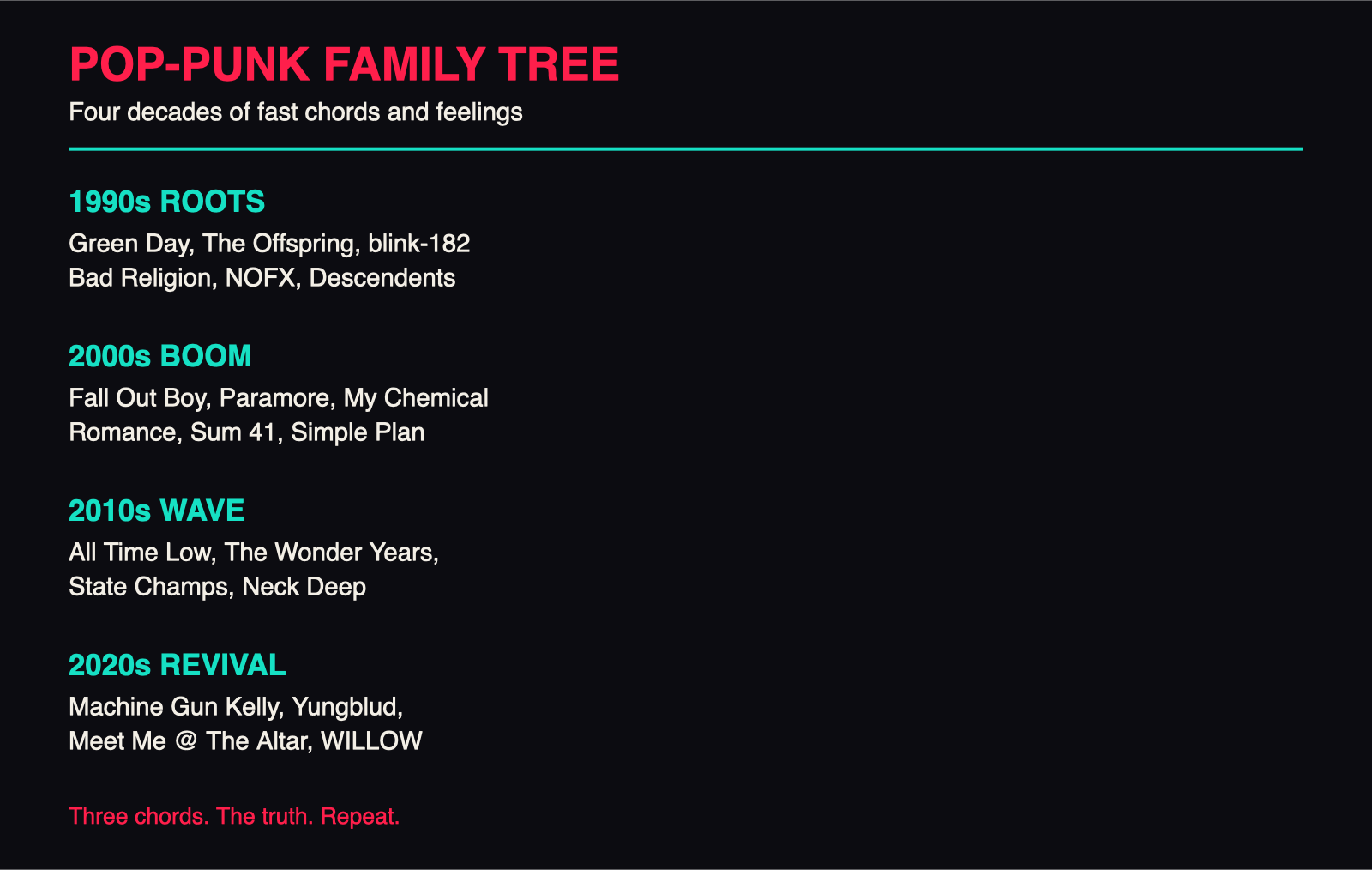
Pop-punk already existed in the 1980s through bands like Descendents and Bad Religion, but it didn’t become a mainstream force until the mid-1990s. Green Day’s 1994 album Dookie was the turning point: the RIAA has certified it Diamond for shipments of more than 10 million copies in the United States, an almost unheard-of figure for a punk-rooted record. The Offspring’s Smash followed that same year and remains the best-selling album ever released on an independent label.
By the end of the decade, blink-182 had turned crude humor and huge choruses into stadium-level success, and a new generation of fans realized punk could be funny, melodic, and massive all at once. To see how pop-punk fits into the wider rock scene of that era, our piece on alternative rock traces the parallel story.
The 2000s: the golden era
The 2000s are when pop-punk became a culture, not just a sound. Fall Out Boy, Paramore, My Chemical Romance, and Panic! At The Disco filled the airwaves, MySpace pages, and shopping-mall stores. The annual Warped Tour, a traveling multi-band festival launched in 1995, became the genre’s beating heart, and the lines between pop-punk, emo, and post-hardcore blurred into one big scene. Package tours carried that energy across the country for years, like the South by So What run featuring Chunk! No, Captain Chunk!, State Champs and Handguns.
- Fall Out Boy brought literary, wordy choruses and crossover pop ambition.
- Paramore proved a young woman could front a genre long dominated by men, and outlasted nearly all of her peers.
- My Chemical Romance pushed pop-punk toward theatrical, concept-album drama.
- Sum 41 and Simple Plan carried the Canadian flag with relentless hooks.
This era also fed directly into what fans call “scene” culture. Our feature on scene bands and where they are now tracks down what happened to those bands.
The 2010s and the revival
As the 2000s mainstream faded, a dedicated underground kept pop-punk alive. The Wonder Years, State Champs, Neck Deep, and All Time Low built loyal followings through hard touring and honest, emotional songwriting. Then, around 2020, pop-punk roared back onto the pop charts. Machine Gun Kelly’s Tickets to My Downfall debuted at No. 1 on the Billboard 200 in 2020, marking a full commercial revival, while artists like WILLOW and Meet Me @ The Altar widened who the genre belonged to. Heading into 2026, nostalgia tours and TikTok rediscoveries keep the catalog more streamed than ever.
Pop-punk and its neighbors
Pop-punk never developed in isolation. It shares DNA with emo, post-hardcore, screamo, and metalcore, and bands constantly crossed between all four. If the screaming and breakdowns throw you off, our explainer on post-hardcore vs screamo vs metalcore sorts out the differences. The festival that brought all of these scenes together is covered in our history of Warped Tour.
Some of pop-punk’s most important records sit shoulder to shoulder with emo classics, which is why our roundup of the best emo and pop-punk albums ever made treats them together. And for the bands that defined the 2000s scene specifically, Twenty One Pilots, Panic! At The Disco, and Sleeping With Sirens show just how far the sound stretched.
Frequently Asked Questions
Is pop-punk the same as punk rock?
No. Pop-punk keeps the speed and energy of punk rock but adds polished, radio-ready melodies and bigger production. Traditional punk more often prioritizes raw aggression and political messaging over catchy choruses.
What was the first pop-punk band?
There’s no single answer, but the Ramones laid the melodic-yet-fast template in the 1970s, and Descendents and Buzzcocks are often credited as early architects. The genre’s mainstream breakthrough came later, with Green Day and The Offspring in 1994.
Why did pop-punk become popular again?
A wave of nostalgia, streaming rediscovery, and new artists like Machine Gun Kelly and WILLOW brought the sound back to the charts around 2020. Older fans revisited the classics while a younger TikTok generation discovered them for the first time.
What instruments define the pop-punk sound?
Electric guitars with distortion and palm-muting, a punchy bass, fast drums with frequent use of the crash cymbal, and a lead vocal carrying a strong melody. The arrangement is usually simple and built for singalongs.
The bottom line
Pop-punk has stuck around because it captures something that doesn’t age out: the messy, urgent feeling of being young, whether you’re sixteen or just remembering sixteen. From Dookie to Tickets to My Downfall, the formula has barely changed, and that’s exactly why it keeps working. Fast, loud, melodic, and honest, pop-punk remains one of the more resilient corners of modern rock.