
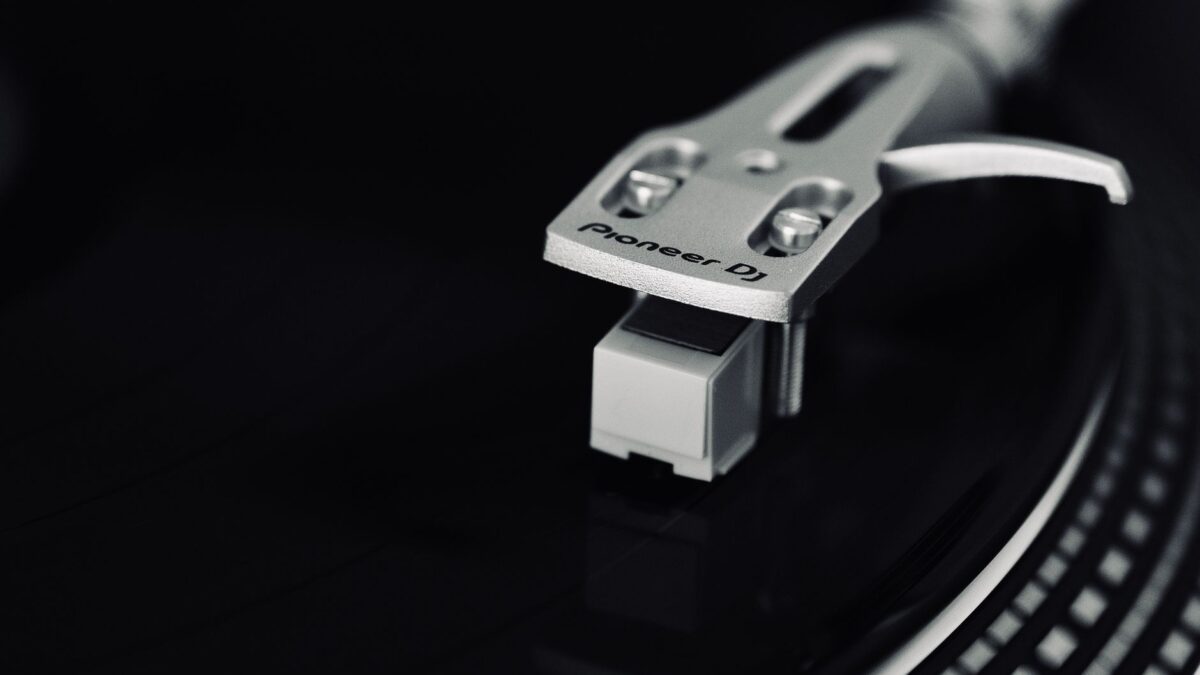
Setting up a turntable correctly means leveling the deck, balancing the tonearm to the cartridge’s recommended tracking force, setting anti-skate, and connecting it through a phono stage before the first play. That is four steps, and none of them take long once you know what to check.
A turntable that is set up wrong sounds dull, skips, and wears your records prematurely. The good news is that proper setup takes about fifteen minutes and no special tools beyond a small bubble level. Here is the step-by-step process.
Step 1: Place and level the deck
Put your turntable on a solid, vibration-free surface away from speakers. Bass from nearby speakers can travel into the platter and cause feedback or skipping. Use a small bubble level on the platter and adjust the feet or shim the surface until it reads dead level in every direction.
Step 2: Balance the tonearm
With the cartridge installed, set the anti-skate to zero and adjust the rear counterweight until the tonearm floats level and parallel to the platter. This is the “zero balance” point. Then rotate the weight’s numbered ring to set the tracking force your cartridge maker recommends, usually somewhere between 1.5 and 2.5 grams. Too little force causes skipping; too much wears grooves.
Step 3: Set anti-skate
Anti-skate counteracts the inward pull on the tonearm as the record spins. A common starting point is to match the anti-skate number to your tracking force number. This keeps the stylus centered in the groove so both stereo channels wear evenly.
Step 4: Connect the signal chain
A turntable’s signal is far too quiet and needs a phono stage to boost and equalize it. Your options:
- Use the turntable’s built-in phono preamp into any line input.
- Use an external phono preamp between the deck and your amp.
- Use an amp or receiver with a dedicated “PHONO” input.
Never plug a phono-level signal into a regular line input without a preamp. It will be nearly silent and lifeless.
Why this matters
Records are worth protecting. Luminate’s year-end report tracked more than 49 million vinyl albums sold in the U.S. in 2023, and the RIAA year-end revenue report confirmed vinyl outsold CDs in units in 2022. With prices climbing toward 2026, a fifteen-minute setup that prevents groove wear pays for itself many times over. Pair it with a regular clean, covered in our guide to how to clean vinyl records. For the wider system, see our beginner’s guide to collecting vinyl, and if your deck is secondhand, run through our checklist for buying a vintage record player first.
Frequently asked questions
How do I know my tracking force is correct?
Follow the cartridge manufacturer’s specified range and set the counterweight to the middle of it. A cheap stylus pressure gauge confirms the exact figure if you want precision.
Does the turntable really need to be perfectly level?
Yes. An unlevel deck pulls the stylus toward one channel, causing uneven wear and possible skipping. A small bubble level solves it in seconds.
What if my records still skip after setup?
Check for too-low tracking force, an unlevel surface, or vibration from nearby speakers. A dirty groove can also cause skips, so clean the record before assuming a setup fault.
Do I need to set up a turntable that came pre-assembled?
Even pre-assembled decks should be leveled and have their tracking force verified after shipping, since transit can shift the counterweight.
The bottom line
Level the deck, zero-balance the tonearm, set tracking force and anti-skate, and route the signal through a proper phono stage. Nail those four steps and your turntable will sound its best while keeping your records safe.