
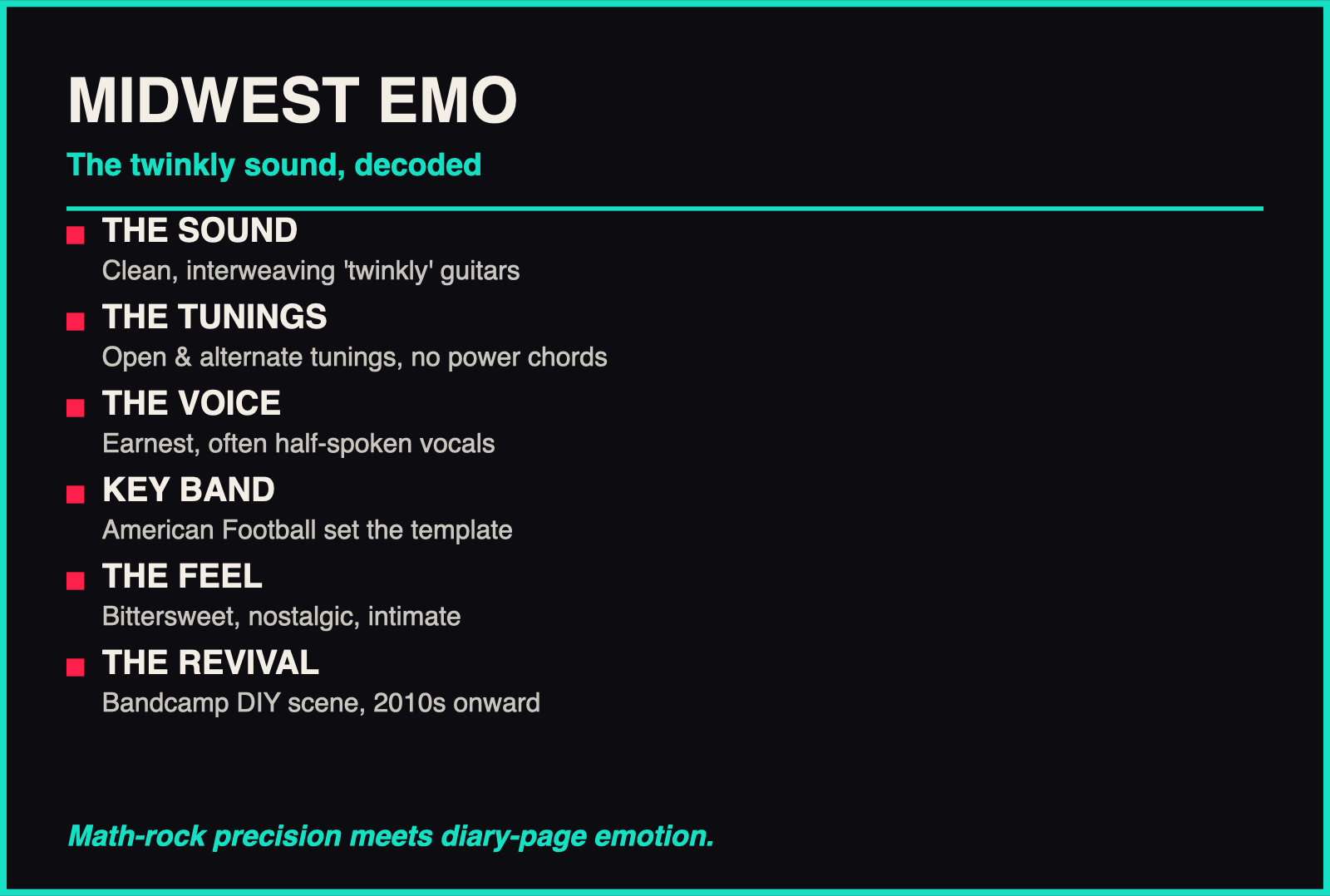
Midwest emo is a melodic, technically intricate strain of emo built on clean, interweaving “twinkly” guitar lines and earnest, conversational vocals. It grew out of the American Midwest DIY scene in the 1990s, trading the distortion of mainstream emo for open tunings and math-rock precision.
If a song makes you feel like you are sitting on a porch at dusk, thinking about someone you lost touch with, there is a good chance it is Midwest emo. The style swapped power chords for delicate, mathy guitar work and quiet emotional honesty. For the bigger picture of how this fits into the genre, see our pillar guide on what emo is.
What “twinkly” actually means
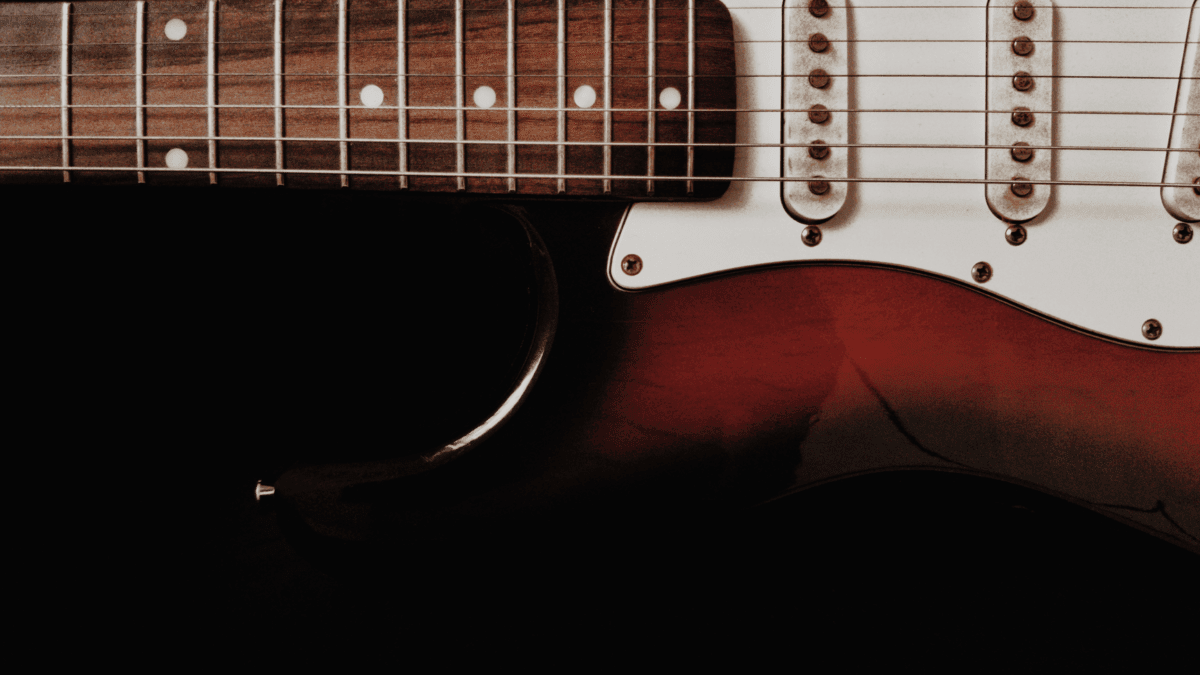
The signature of Midwest emo is its guitar tone. Instead of big power chords, two guitars play clean, arpeggiated parts that weave around each other, often in open or alternate tunings so the strings ring out. Fans call this sound “twinkly” because the notes shimmer and overlap, closer to wind chimes than a wall of noise. The style owes as much to math rock as it does to punk.
- Clean tone, with little to no distortion on the guitars
- Alternate tunings, so open strings ring against fretted notes
- Interlocking parts, with two guitars trading and overlapping melodies
- Loose, earnest vocals, sometimes barely sung at all
The bands that built the sound
Despite the name, Midwest emo was never strictly geographic, but its founding acts really did come from the American Midwest. American Football, from Urbana, Illinois, released a 1999 self-titled album that became the genre’s holy grail. Cap’n Jazz, The Promise Ring, and Mineral rounded out the original blueprint, each pulling the sound in a slightly different direction.
| Band | Home Base | Contribution |
|---|---|---|
| American Football | Urbana, IL | Defined the twinkly template |
| Cap’n Jazz | Chicago, IL | Frantic, foundational chaos |
| The Promise Ring | Milwaukee, WI | Catchier, melodic edge |
| Mineral | Texas (kindred spirit) | Slow-burning emotional builds |
The revival generation
Midwest emo came back hard in the 2010s through bands like Snowing, Algernon Cadwallader, and Tiny Moving Parts, who spread the sound on Bandcamp and through DIY touring rather than radio. That grassroots model is part of why the style still feels intimate rather than manufactured. RIAA figures show streaming made up roughly 84% of U.S. recorded-music revenue in 2023, and that kind of easy access is what let a niche, guitar-nerd subgenre find listeners well outside the scene that built it. Heading into 2026, twinkly emo playlists routinely rack up hundreds of thousands of streams despite almost no radio play.
The bands that mainstreamed emo are a different story; for those arena-sized acts, see our list of the essential emo bands.
Why it endures
Midwest emo has stuck around longer than most microgenres manage to. Luminate’s 2024 Year-End Music Report found that catalog titles dominated U.S. on-demand audio streaming, and emo’s revival catalog benefits from that same long-tail listening pattern: people keep returning to twenty-year-old records instead of only chasing new releases. Play a twinkly riff for someone who has never heard the genre, and there is a decent chance they will ask who it is before the song even ends.
Frequently asked questions
Why is it called “Midwest” emo?
Because many of the founding bands, including American Football and Cap’n Jazz, came from Midwestern states like Illinois and Wisconsin. The name stuck even after the style spread worldwide.
What makes a guitar sound “twinkly”?
Twinkly guitar comes from clean tones, alternate tunings, and interlocking arpeggios that let open strings ring out against fretted notes, creating a shimmering, overlapping effect instead of a wall of distortion.
Is Midwest emo the same as math rock?
They overlap heavily and share technical, intricate guitar work, but Midwest emo leans more on emotional, confessional vocals, while math rock often puts the focus on complex rhythms and instrumental interplay.
What album should I start with?
American Football’s 1999 self-titled debut is the universal starting point. From there, work through Cap’n Jazz and revival-era bands like Algernon Cadwallader.
The bottom line
Midwest emo is emo turned down and turned inward: shimmering, interlocking guitars built around vocals that sound like someone talking to a friend rather than performing for a crowd. It is the quiet counterpart to the genre’s louder mainstream moment, and it rewards patient listening more than a first spin usually suggests. Keep exploring with our guides to the genre’s roots and the greatest emo songs of all time. The genre also overlaps heavily with the intricate world of math rock, as our guide to the best math rock bands shows.