
The best concert earplugs turn the volume down evenly instead of muffling the music, using filters built for hearing protection that keep vocals and guitars sounding like themselves. They’re the cheapest insurance any music fan will ever buy.
That ring in your ears on the drive home from a great show isn’t a souvenir. It’s a warning. Loud concerts can cause permanent hearing damage, but the right pair of earplugs lets you stand at the barricade tonight and still hear the record clearly next year. This guide covers how concert earplugs actually work, why the foam plugs from the gas station aren’t the answer, and what to look for before you buy. Pair it with our broader rundown of what to bring to a concert.
Why Concert Volume Is a Real Risk
Live concerts routinely push sound levels well past the point where prolonged exposure turns dangerous. The damage adds up over years, and it doesn’t reverse. The early warning sign, that ringing called tinnitus, can turn into a permanent companion if you ignore it long enough. The upside: protection here is simple and cheap. Nobody has to trade loving live music for keeping their hearing.
Foam vs High-Fidelity Earplugs
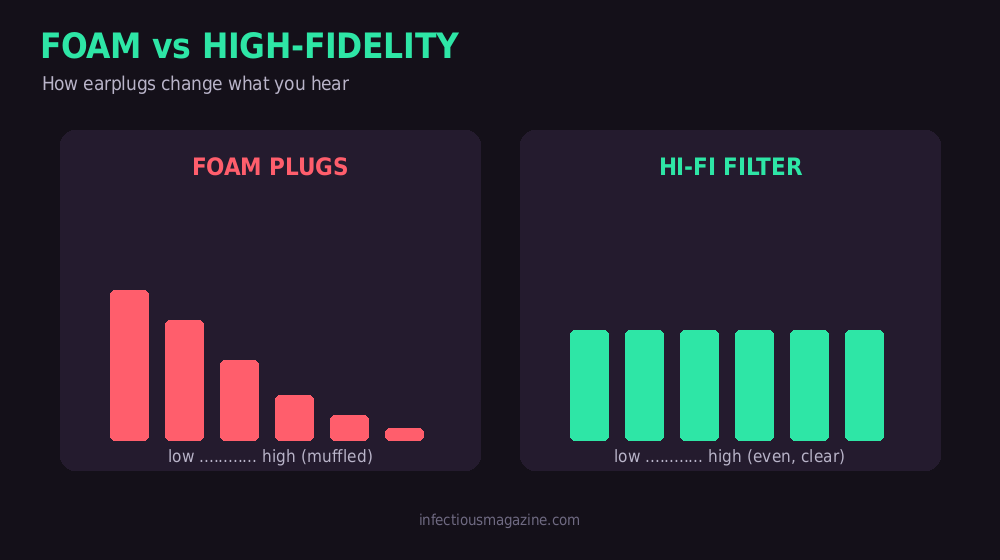
Cheap foam earplugs do cut volume, but unevenly. They smother the high frequencies first, so a set from the merch table can leave a mix sounding like it’s playing through a wall. High-fidelity earplugs use a precision filter that lowers the whole frequency range by roughly the same amount, so the music stays balanced, just quieter. For anyone who actually cares how the show sounds, that distinction matters. A muffled set isn’t worth standing through; a clear one at a lower volume is what you want.
- Foam plugs – cheap, but muffle the highs and dull the whole mix.
- High-fidelity filters – reduce volume evenly, so the music stays clear.
- Reusable filtered plugs – the sweet spot for anyone who goes to shows regularly.
- Custom-molded plugs – the best fit and comfort for frequent gig-goers.
How to Choose the Right Pair
Look for a stated noise reduction rating and, more importantly, a flat or even attenuation profile rather than plugs built for maximum muffling. Reusable filtered earplugs from established hearing-protection brands cover most fans just fine. Go to shows constantly, or play in a band yourself? Custom-molded plugs are worth the extra cost. It’s the same hearing-first logic that pushes musicians toward in-ear monitors on stage.
Protecting Your Ears in 2026
Hearing protection has gone mainstream. Public health bodies have repeatedly warned that more than a billion young people worldwide are at risk of hearing loss from unsafe listening, concerts and personal audio included. The live sector keeps growing too, with industry figures reported in 2026 showing live music revenue at record highs. More shows on the calendar means more nights of exposure for regular gig-goers. That’s part of why filtered earplugs are a normal sight in the crowd now, not a mark of being uncool. Heading to a multi-day event soon? Our festival survival guide covers pacing yourself through a long lineup, which matters even more when your ears are already tired from day one. If your ears are already ringing, our piece on tinnitus and stress is worth a read.
Frequently Asked Questions
Do concert earplugs ruin the sound?
Good ones don’t. High-fidelity earplugs use filters that lower the volume evenly across frequencies, so the music stays clear and balanced, just quieter. It’s the cheap foam plugs that muffle the sound.
How much do good concert earplugs cost?
Reusable high-fidelity earplugs are inexpensive and last for years, which makes them one of the cheapest forms of long-term hearing protection you can buy. Custom-molded versions cost more but offer the best fit.
Can one loud concert damage your hearing?
Yes. A single very loud show can cause temporary or even permanent damage, and the effect builds over time, which is why it’s worth protecting your ears at every gig, not just the loud ones.
Conclusion
The best concert earplugs let you keep going to shows for decades instead of paying for tonight’s set with next year’s hearing. Skip the foam, pick high-fidelity filters, and hear the next hundred shows the way they’re meant to sound.