

In-ear monitors, or IEMs, are high-fidelity earphones that seal into the ear canal to deliver detailed, isolated sound. Musicians used them first to hear a clean mix on stage, and the same design now draws audiophiles and everyday listeners who want studio-grade audio on the go.
Watch a live show and you’ll spot the singer wearing a small earpiece tucked out of sight. That’s an in-ear monitor at work, feeding the performer a clean mix while blocking the noise coming off the stage. Fans get a similar benefit off stage: music that sounds close to how it was recorded. This guide covers what IEMs are, how they work, and how to pick a pair, whether you’re performing or just riding the train.
What in-ear monitors actually are
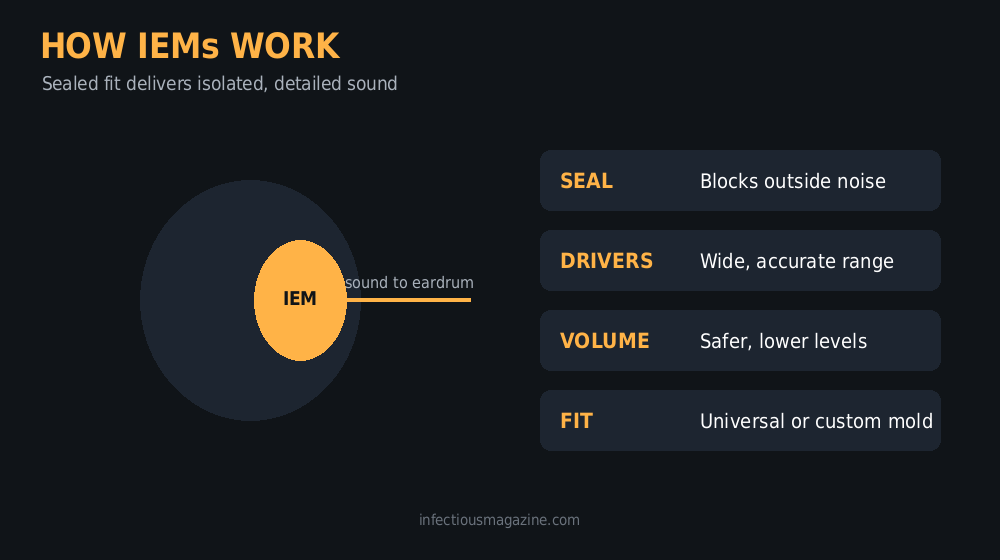
An in-ear monitor is a sealed earphone that fits into the ear canal, blocking outside noise and sending audio straight to the eardrum. Unlike cheap earbuds, IEMs use precision drivers, sometimes several per ear, to cover a wide and accurate frequency range. That seal does two things: it isolates you from ambient noise, and it lets you listen at lower, safer volumes because nothing is competing with the music.
Why musicians rely on IEMs
On stage, IEMs replaced the bulky floor wedge speakers musicians once used to hear themselves. A custom in-ear mix gives each performer exactly what they need while protecting their hearing from punishing stage volume. Hearing damage is a real risk for touring musicians, which is why protection matters as much on stage as it does in the crowd, a theme we cover in our guide to what to bring to a concert. The same isolation that helps performers also makes IEMs useful for critical listening off stage.
How to choose the right pair
Picking IEMs comes down to driver type, fit and budget. Universal-fit IEMs use silicone or foam tips and suit most people, while custom-molded pairs are made from an impression of your ear for a tighter seal. More drivers can mean richer detail, but not always better sound, so reviews matter more than spec sheets. A good seal is everything: lose it, and the bass disappears along with the isolation.
- Driver type: dynamic drivers lean warm, balanced armature drivers lean detailed, and hybrid designs blend both.
- Fit: universal tips are convenient; custom molds give the tightest seal.
- Wired vs wireless: wired stays the reliable choice on stage, while wireless suits everyday use.
- Budget: solid entry-level pairs exist, and returns diminish fast once you go high end.
IEMs and the listening boom in 2026
Personal audio keeps growing. By 2026, streaming accounted for the overwhelming majority of recorded-music revenue worldwide, pushing more listeners toward earphones that can actually resolve that audio properly. Public health bodies have also repeatedly warned that more than a billion young people are at risk of hearing loss from unsafe listening habits, which is exactly where the isolation and lower safe volumes of a well-fitted IEM pay off. That extra detail really shows on dense material, like shoegaze bands and layered dream pop.
Frequently asked questions
Are in-ear monitors better than headphones?
It depends on the use. IEMs isolate sound better and travel easier, which is why they’re standard gear on stage, while over-ear headphones often give a wider soundstage for home listening. Plenty of people own both.
Are in-ear monitors safe for your hearing?
Yes, when used sensibly. Because IEMs block outside noise, you can listen at lower volumes than you’d need on open earbuds fighting ambient sound, and that can actually protect your hearing over time.
Do you need custom in-ear monitors?
Not necessarily. Universal-fit IEMs with the right tips suit most listeners. Custom-molded pairs give the best seal and comfort, which is why professional musicians who wear them for hours tend to prefer them.
Conclusion
In-ear monitors sit between professional stage gear and everyday listening gear. They isolate sound, protect your hearing, and can make even densely layered records feel more alive. Whether you’re performing or just commuting, the right pair changes how you hear music. Performers who need to roam the stage often go cable-free, as our guide to wireless in-ear monitors explains. Vocalists have their own monitoring needs, covered in our guide to in-ear monitors for singers.