
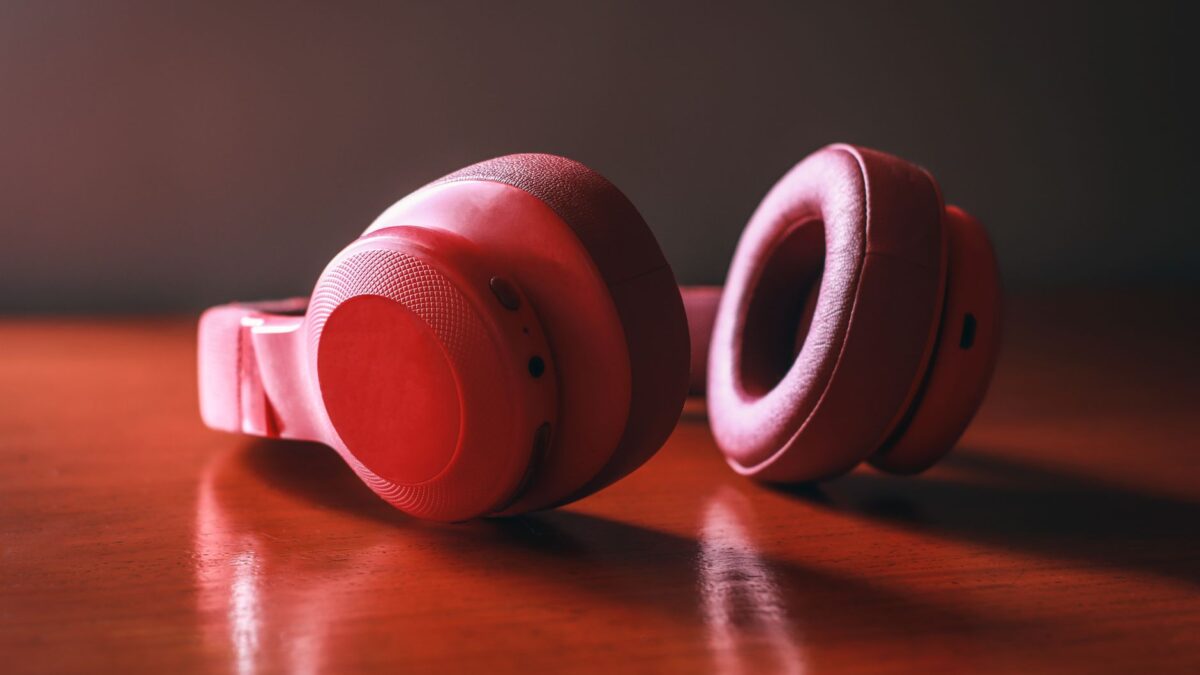
Studio headphones are tuned for a flat, honest response so engineers can catch flaws while recording and mixing, while audiophile headphones are voiced for an enjoyable, often more colored listening experience. The split shows up in the build too: closed-back isolation on one side, open-back soundstage on the other.
People toss around “studio” and “audiophile” as if they mean the same thing, but the labels point at different design goals entirely. Buy the wrong one and you’ll likely end up disappointed with a perfectly good pair of headphones. Here’s what actually splits them apart.
The Core Difference: Tuning Philosophy
Studio headphones aim for accuracy. Engineers need to hear exactly what’s on the recording, including harshness and mistakes, so studio cans target a flat frequency response without flattering boosts anywhere in the range. Audiophile headphones work toward a different goal: they’re tuned to sound good. Many add a gentle bass lift or a touch of treble sparkle to make music feel more engaging, even when that’s technically less accurate to the source.
Build and Practicality
Studio headphones tend to run closed-back for isolation while tracking, and they’re built rugged, with replaceable parts and a long cable that can survive years on a studio floor. Audiophile headphones lean open-back more often for soundstage, with premium materials and a comfort profile suited to long sessions at home rather than a twelve-hour shift behind a mixing desk. Cabling follows the same split: studio models favor a durable coiled cable, audiophile pairs often ship with a detachable one you can upgrade later.
Which One Should You Buy?
| If You… | Choose | Because |
|---|---|---|
| Record or mix music | Studio | Flat response shows the truth |
| Want the most enjoyable listen | Audiophile | Voiced to please your ears |
| Need isolation | Closed studio | Blocks and contains sound |
| Want a wide soundstage | Open audiophile | Airy, spacious presentation |
The Overlap
The line blurs at the high end. Some flat studio reference headphones are beloved by audiophiles precisely because accuracy can be its own kind of enjoyment, and a handful of audiophile models measure neutral enough for light mixing. That crossover mirrors a real shift: the RIAA year-end revenue report showed vinyl outsold CDs in units in 2022, and the IFPI Global Music Report has tracked year-over-year growth in recorded-music revenue, both pointing toward a growing audience of quality-focused listeners heading into 2026.
If you’re still choosing your first serious pair, our roundup of the best headphones for music lovers breaks down the types in plain language, and our beginner’s guide to collecting vinyl covers pairing them with a turntable setup.
A Word on Impedance and Power
Studio headphones come in low- and high-impedance versions, and high-impedance models are built to be driven by the dedicated headphone outputs on mixing consoles and audio interfaces. Audiophile open-back models can be just as power-hungry. The takeaway holds for both camps: if a pair sounds quiet or thin straight out of your phone, it probably needs a headphone amp to show what it can do. Budget for that up front instead of blaming the headphones. An underpowered pair never reveals its real character, regardless of design philosophy.
Your headphones are only as good as whatever’s feeding them, which is part of why the vinyl, streaming and CD debate still matters for anyone serious about how their music sounds.
Frequently Asked Questions
Can I use studio headphones for everyday listening?
Yes, though the flat tuning can sound a little dull next to consumer headphones at first. Plenty of listeners end up preferring that honesty once their ears adjust.
Are audiophile headphones bad for mixing?
Their colored tuning can mislead mixing decisions, since what you hear isn’t strictly what’s on the track. A few neutral audiophile models work fine for casual mixing, but dedicated studio cans stay the safer choice for accurate work.
Why are studio headphones often closed-back?
Closed-back designs keep sound from leaking into nearby microphones while recording and block outside noise, both essential in a tracking environment.
Do I need both kinds?
Only if you both make music and listen critically for pleasure. Most people do fine with one well-chosen pair suited to their main use.
The Bottom Line
Buy studio headphones for accuracy when you’re recording or mixing, and buy audiophile headphones for the sheer pleasure of listening. Know the tuning goal behind each pair, match it to what you actually do with your ears, and either choice will serve you well.