
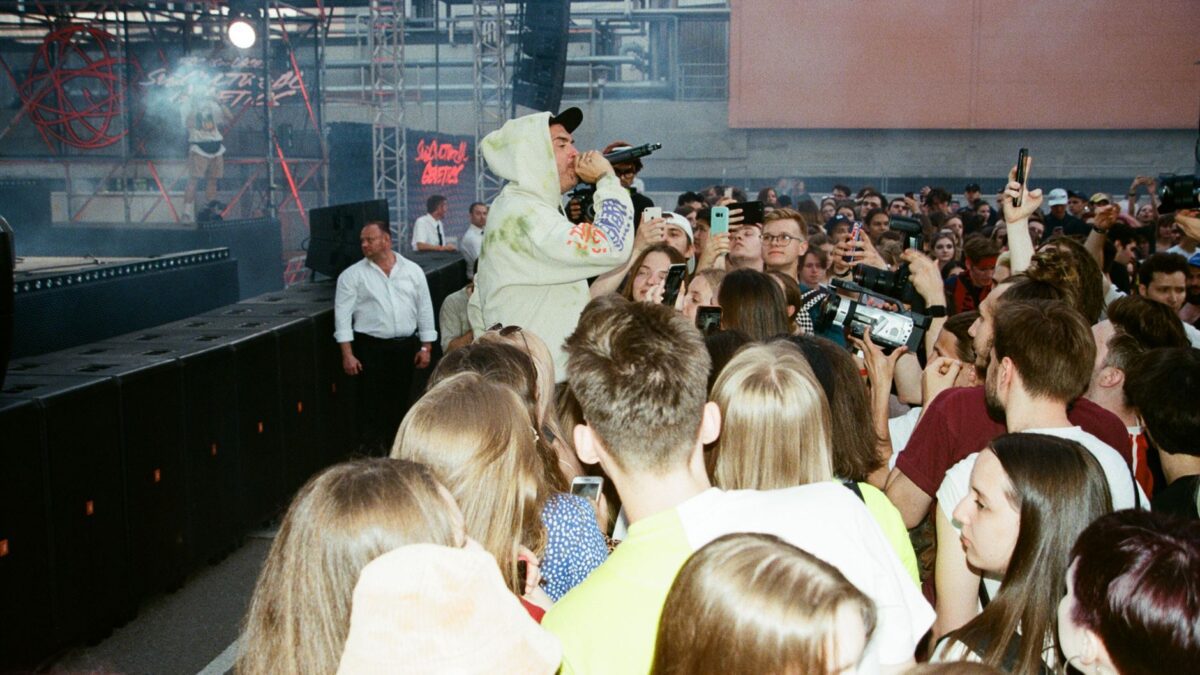
Emo rap fuses hip-hop’s trap beats and vocal delivery with emo’s raw, confessional lyrics and melodic guitar samples, trading swagger for songs about heartbreak, anxiety and depression. The genre grew out of the mid-2010s SoundCloud scene, where young artists uploaded lo-fi tracks straight to fans. Its sound blurs rapping and singing, often through heavy auto-tune.
Traditional hip-hop tends to project confidence outward; emo rap turns the lens inward. Its artists layer trap-inflected verses over sampled emo and pop-punk guitar lines, genres built on raw, diaristic lyricism, and treat singing and rapping as interchangeable tools rather than separate skills. Within a few years, the style moved from bedroom uploads to platinum plaques and changed how a young audience talked about mental health in music.
The Sound: Hip-Hop Meets Emo
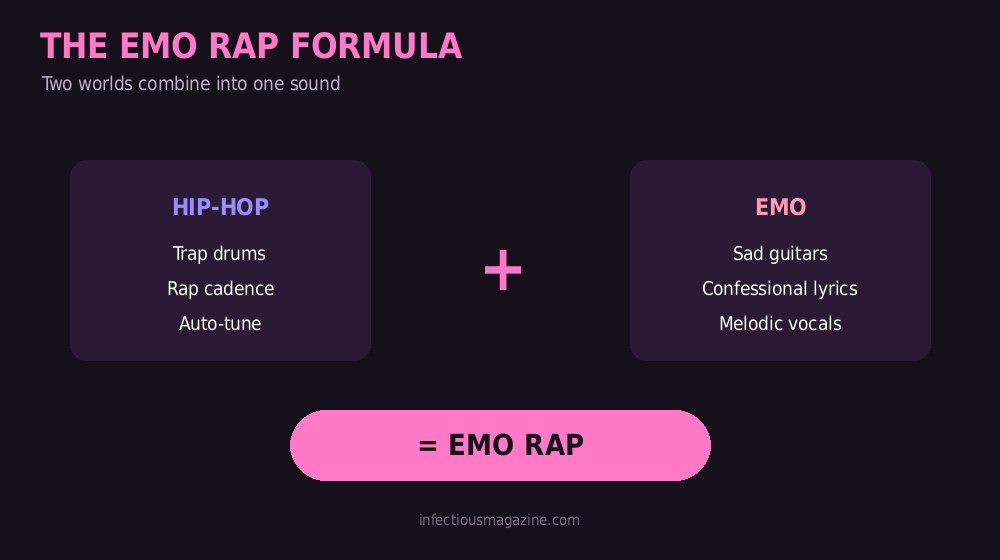
Producers built the genre’s beats from trap-style 808s and rattling hi-hats, then looped downtuned, chorus-pedal guitar lines lifted from mid-2000s emo and pop-punk records. Vocals sit somewhere between a rap cadence and a sung hook, usually pushed through heavy auto-tune to sound raw rather than polished. Where mainstream rap leans on braggadocio, this style leans into confession, naming depression, addiction and heartbreak directly instead of talking around them.
The Roots and Rise
The scene took shape on SoundCloud starting around 2014, where teenage artists could post a track from a bedroom setup and reach an audience directly, no label or radio required. The connection to emo was not subtle: many of these artists grew up on the bands covered in our look at the 2000s emo revival and sampled them openly. That do-it-yourself streak and open emotional register carried straight over from the original emo movement, just run through hip-hop production and shared over the internet instead of on tour. For a look at the guitar-driven side of that same lineage, see our best emo albums roundup.
Key Artists and Their Impact
A handful of artists carried emo rap from web forums into the mainstream, all working from the same confessional playbook: heavy melody, minimal bravado, blunt lyrics about pain. Several of the genre’s most successful posthumous releases have topped the charts and broken streaming records, proof that vulnerability sold just as well as any harder-edged rap subgenre. That style’s roots reach back to the bands profiled in our midwest emo guide, a lineage that still shows up in the guitar tones producers loop today.
Emo Rap in 2026
By 2026, emo rap’s fingerprints are all over mainstream pop and hip-hop. Hip-hop and R&B remain among the most-streamed genres worldwide, and the melodic, emotionally raw approach emo rap popularized shows up across the charts. The style also fed into a broader emo revival: vinyl sales have climbed for more than fifteen straight years, and that demand covers both classic emo pressings and the rap acts they influenced. For deeper listening, a good pair of in-ear monitors reveals just how much detail sits in these productions.
Frequently Asked Questions
What is emo rap?
Emo rap blends hip-hop’s rhythm and vocal delivery with emo’s confessional lyrics and melodic guitar work, usually centered on heartbreak, anxiety or depression rather than the swagger typical of mainstream rap.
How is emo rap different from regular rap?
It leans more melodic and emotionally open than mainstream rap, built around sampled emo and pop-punk guitars and lyrics about depression or loss instead of confidence and status.
When did emo rap become popular?
Emo rap took off in the mid-2010s on SoundCloud, then crossed into the mainstream charts by the late 2010s.
Conclusion
Emo rap showed that hip-hop could carry the same rawness as the emo records it borrowed from. Trap beats, melancholy guitar loops and unguarded lyrics turned into a genre-crossing sound that pulled emo’s confessional style into rap’s biggest stages. That fusion still shapes how melodic, emotionally direct hip-hop gets made in 2026.