
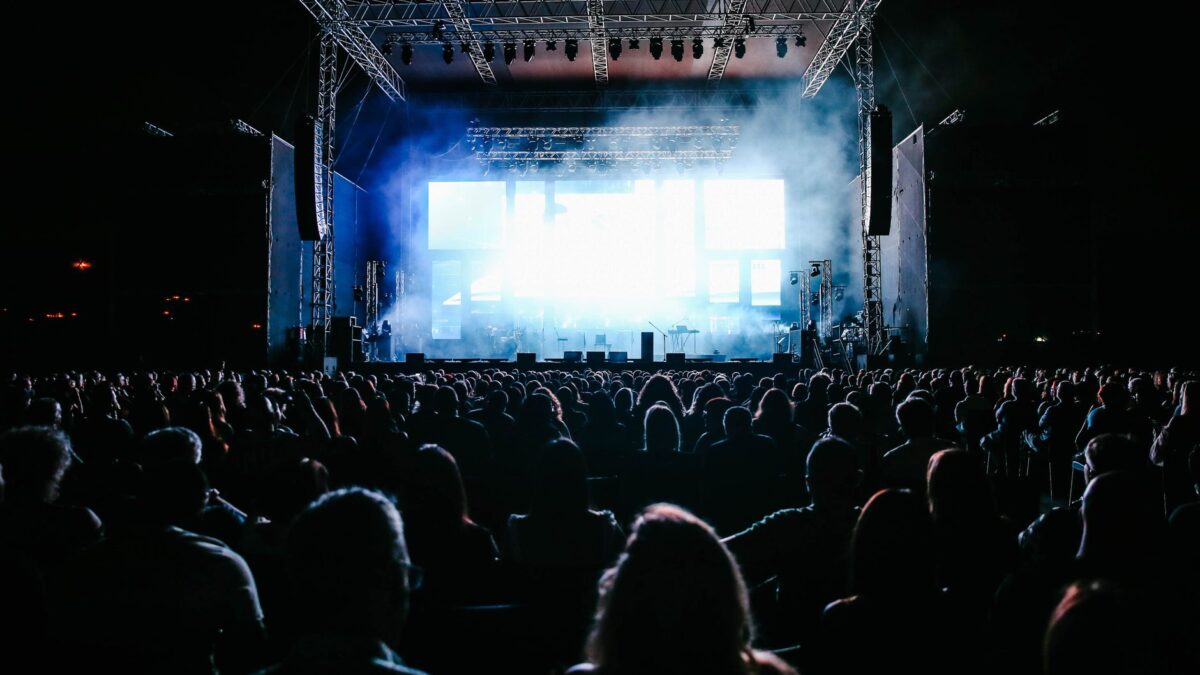
2000s emo was the genre’s commercial golden era, when bands like My Chemical Romance, Fall Out Boy, and Paramore turned a punk offshoot into a mainstream phenomenon, powered by MySpace and the Warped Tour.
For a stretch of the mid-2000s, emo was everywhere: on the radio, on music television, and on millions of teenage MySpace pages. That run defined the genre for a whole generation, and it is the same run fueling today’s nostalgia wave. For the genre’s full history, see our pillar on what emo is.
How MySpace built the scene
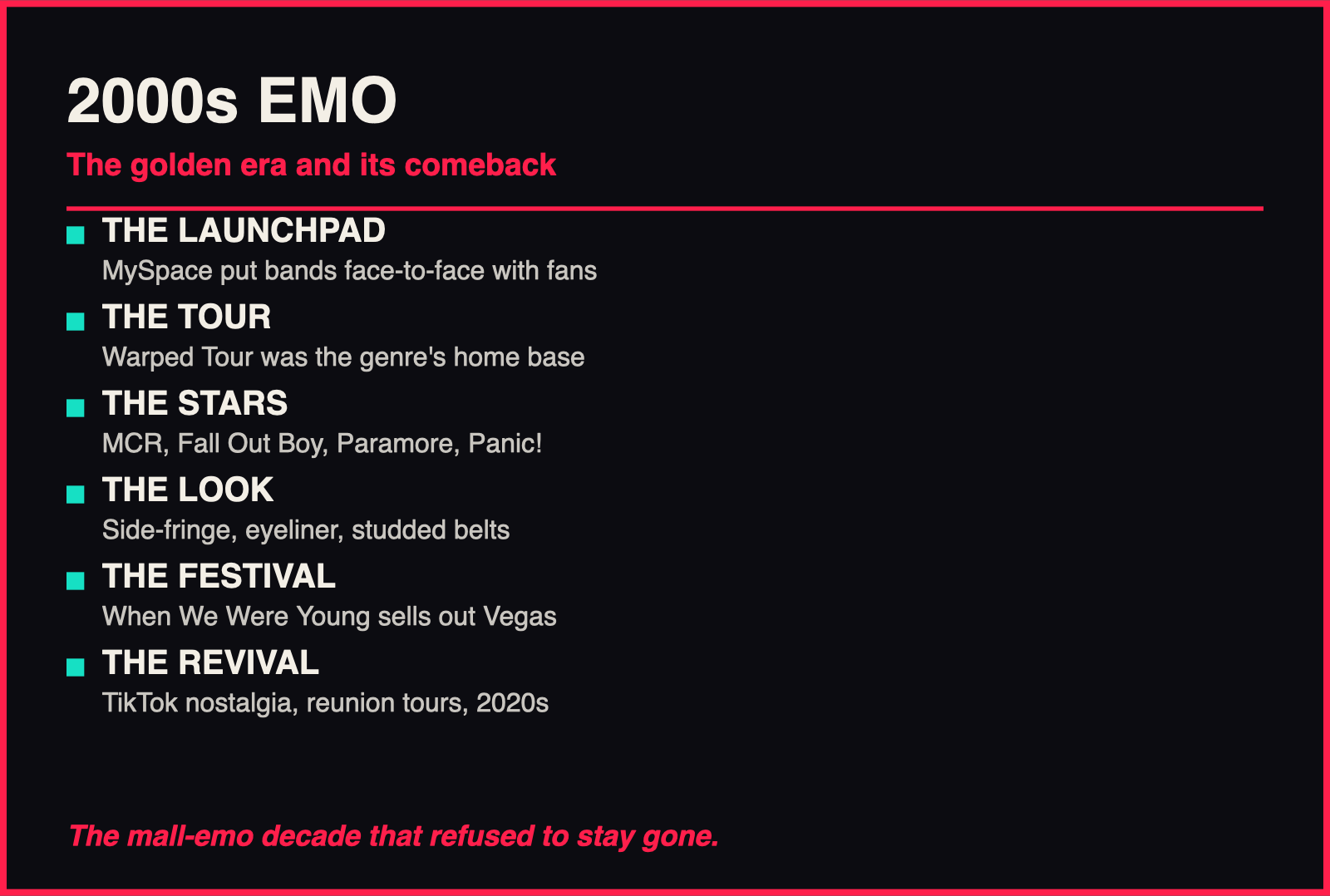
The 2000s emo boom cannot really be separated from MySpace. Launched in 2003, the platform let bands share songs and reach fans directly, without radio or a label deciding who got heard first. Fall Out Boy and My Chemical Romance both built enormous followings this way, and the “Top 8” friends feature turned music taste into a form of identity. Bands and fans were networking with each other years before social media became a daily habit for everyone else.
The Warped Tour years
If MySpace was the scene’s home online, the Vans Warped Tour was its home offline. The traveling festival became the proving ground for emo and pop-punk bands, putting them in front of huge crowds every summer. A whole generation discovered their favorite bands sweating it out in a parking lot at Warped.
| Band | Breakthrough Album | Year |
|---|---|---|
| My Chemical Romance | Three Cheers for Sweet Revenge | 2004 |
| Fall Out Boy | From Under the Cork Tree | 2005 |
| Panic! at the Disco | A Fever You Can’t Sweat Out | 2005 |
| Paramore | Riot! | 2007 |
The commercial numbers were unusual for a genre with punk roots. The RIAA has certified several of these albums multi-platinum, with sales in the millions during the era’s peak. A genre that started in basements was suddenly selling out arenas.
The look and the lifestyle
2000s emo came with a complete aesthetic: side-swept fringes, heavy eyeliner, skinny jeans, and studded belts. The look was as recognizable as the music, and it got the genre mistaken for goth more than once. Our emo vs goth breakdown untangles the two. Our emo fashion guide and emo hair guide both trace their roots straight back to this decade.
The revival
Emo never fully disappeared, but the 2020s brought a full-blown revival. TikTok introduced the music to a new generation, reunion tours sold out, and the When We Were Young festival began packing Las Vegas with lineups built entirely from 2000s emo and pop-punk acts. The numbers back it up: Pollstar’s year-end touring reports have repeatedly ranked pop-punk and emo reunion runs among the strongest-selling tours, and demand for those nostalgia bills has carried straight into 2026. Weekly emo night events at clubs keep the catalog in rotation between festival cycles too.
Streaming amplifies the comeback. RIAA data shows streaming made up roughly 84% of U.S. recorded-music revenue in 2023, and emo’s catalog thrives in that always-on environment, introducing golden-era hits to listeners who were not even born when the songs came out. Even individual scene veterans get rediscovered, as our look at where some of the era’s rockers ended up shows.
No band captured the 2000s emo-pop crossover quite like Panic! At The Disco, whose baroque debut became a scene landmark.
Frequently asked questions
Why was emo so popular in the 2000s?
A perfect storm: MySpace let bands reach fans directly, the Warped Tour built a touring circuit, and the music’s emotional honesty resonated with teenagers. Together those forces pushed emo into the mainstream.
What is “mall emo”?
“Mall emo” is a sometimes-teasing term for the polished, commercially successful 2000s emo of bands like My Chemical Romance and Fall Out Boy, named for its popularity among mall-shopping teens. It contrasts with the genre’s underground roots.
Why is 2000s emo making a comeback?
Nostalgia is a powerful force. The original fans are now adults with money for concerts and merch, while TikTok introduced the music to younger listeners. Festivals and reunion tours capitalized on both audiences.
What festival celebrates 2000s emo?
The When We Were Young festival in Las Vegas is the marquee event, assembling lineups packed with the biggest emo and pop-punk acts of the 2000s. It regularly sells out.
The bottom line
2000s emo was the genre’s loudest, biggest moment, built on MySpace, the Warped Tour, and a generation that felt seen in the lyrics. It is back now, carried by nostalgia, festivals, and streaming. Keep the playlist going with our list of the greatest emo songs and the essential emo bands behind the era. That emotional thread carried into a new genre entirely, which we trace in our explainer on emo rap.