
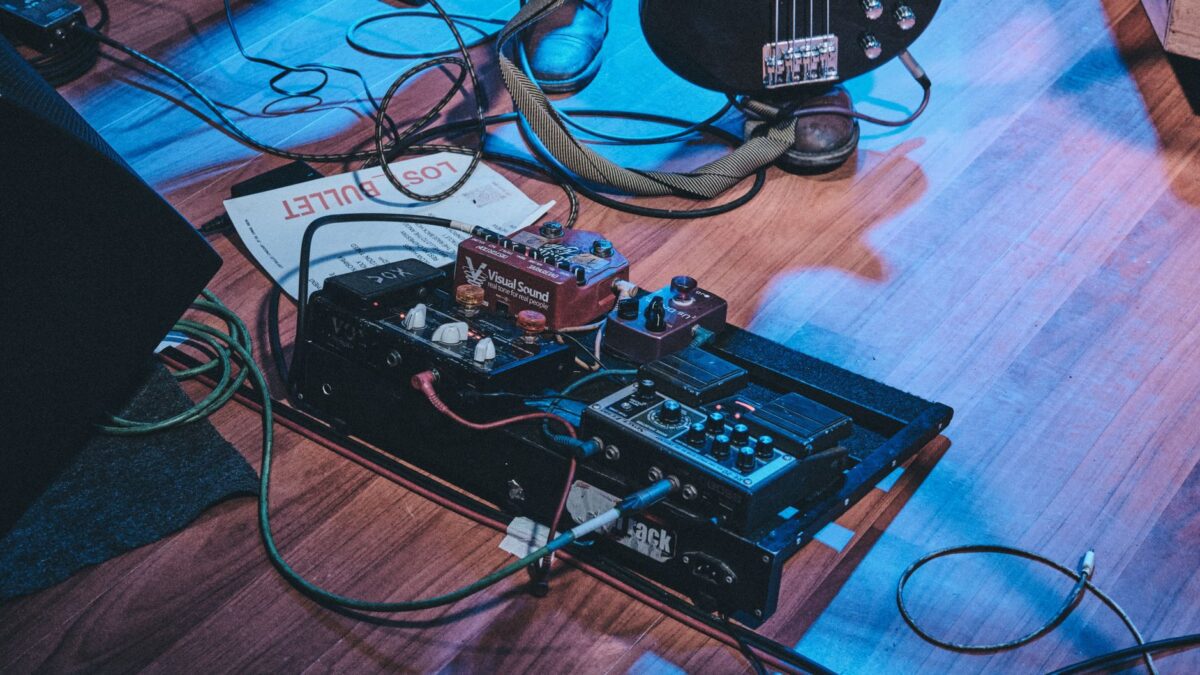
My Bloody Valentine is shoegaze’s defining act, the band every other name on this list gets measured against. The genre itself runs on blurred guitars, vocals buried low in the mix and a wall of sound thick enough to feel like weather, a formula the pioneers set and the modern revival keeps reworking.
The term “shoegaze” was coined by the British music press in the late 1980s, mocking how the musicians stared down at their effects pedals instead of the crowd. The insult stuck and turned into a badge of honour. What started as a small UK scene now influences artists worldwide. This guide walks through the essential shoegaze bands, era by era. If you are new to the sound, our explainer on what shoegaze actually is is a good place to start first.
The pioneers who defined the sound
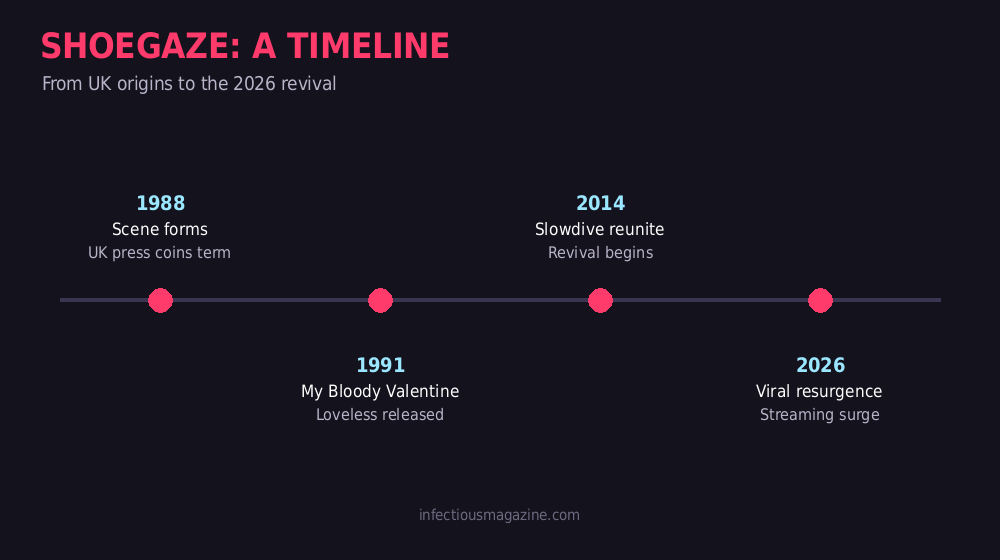
No band is more central to shoegaze than My Bloody Valentine. Their 1991 album Loveless is the genre’s defining statement, reportedly costing a fortune and nearly bankrupting their label, Creation Records, in the process. Slowdive and Ride followed close behind, balancing noise with melody, while Lush and Chapterhouse rounded out the original wave. Together these acts turned guitar distortion into something dreamy rather than aggressive, which is the trait that still separates shoegaze from straight noise-rock.
The bridge to dream pop and beyond
Shoegaze never lived in isolation. It overlapped with dream pop acts like Cocteau Twins, whose ethereal textures fed directly into the genre’s DNA. American bands such as The Jesus and Mary Chain had already shown how feedback could carry a pop melody, and that idea became central to the whole scene. The same guitar-first spirit also runs through alternative rock, which shared festival stages with shoegaze throughout the 1990s.
The modern revival acts
After a quiet decade, shoegaze roared back. Slowdive reunited in 2014 to acclaim, and a new generation took over from there. DIIV, Nothing, Whirr and Wisp brought the sound to younger audiences, helped along by social platforms. A viral resurgence pushed classic tracks back onto streaming charts: industry reporting in 2026 noted that interest in shoegaze on streaming services has climbed sharply, with catalogue tracks from the 1990s finding millions of new listeners decades after release.
A few names anchor each stage of that story: My Bloody Valentine as the uncompromising architects, Slowdive as the melodic heart and now a thriving reunion act, Ride as the more energetic, song-focused side of the original wave, and DIIV leading the revival for fans who found the genre through streaming rather than record shops. Our roundup of where scene bands are now tracks a few of the other acts still touring from that era.
Why shoegaze still matters in 2026
According to figures cited across the music industry in 2026, vinyl sales have grown for more than fifteen consecutive years, and reissues of classic shoegaze records have been a steady part of that boom. The genre’s mix of texture and melody keeps feeding into other scenes, including midwest emo and modern indie. Heavy reverb and layered effects also push listeners toward better gear, which is why a solid pair of in-ear monitors can change how these dense records actually sound.
Frequently asked questions
What is the most famous shoegaze band?
My Bloody Valentine is widely regarded as the most famous and influential shoegaze band, largely thanks to their 1991 album Loveless, which is considered the genre’s defining record.
Is shoegaze the same as dream pop?
They are closely related but not identical. Shoegaze leans on dense guitar distortion and effects, while dream pop favors softer, more atmospheric textures. Plenty of bands sit comfortably in both camps at once.
Why is it called shoegaze?
The name mocks how musicians stared down at their rows of guitar effects pedals during live shows, appearing to gaze at their shoes instead of engaging the audience.
Which bands should I start with if I’m new to the revival?
DIIV and Slowdive’s post-reunion material are the easiest entry points, since both lean melodic rather than purely noisy. Nothing and Wisp show where the sound has gone from there.
The takeaway
Shoegaze keeps finding new ears despite predictions it had run its course. From My Bloody Valentine’s original wall of noise to a 2026 revival driven by new bands and viral discovery, the formula holds: blur the guitars, bury the vocals, let the wall of sound do the talking. Start with the pioneers, then follow the thread into the modern acts keeping it alive. To dig into the current scene, see our feature on the modern shoegaze artists driving the revival.