
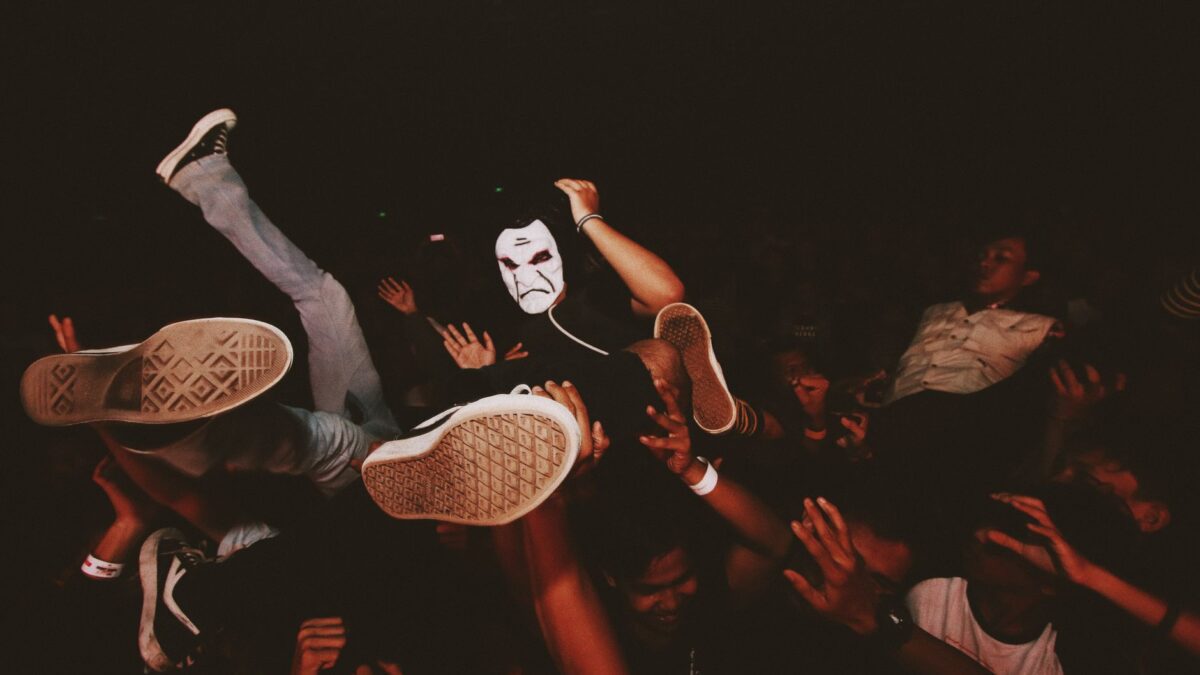
Metalcore is a heavy fusion genre that blends the technical riffing and double-bass drumming of metal with the raw aggression of hardcore punk, defined by crushing breakdowns and a signature contrast between screamed verses and clean, sung choruses that took shape in the 1990s.
Metalcore grew up on the same touring circuits as emo and pop-punk, and plenty of fans follow all three scenes at once. Anyone who has heard a song lurch into a slow, pummeling section that sends a whole crowd into the pit has heard a breakdown, and heard metalcore doing what it does best. For how the genre fits alongside emo and pop-punk, see our pillar on what emo is.
The fusion at its core
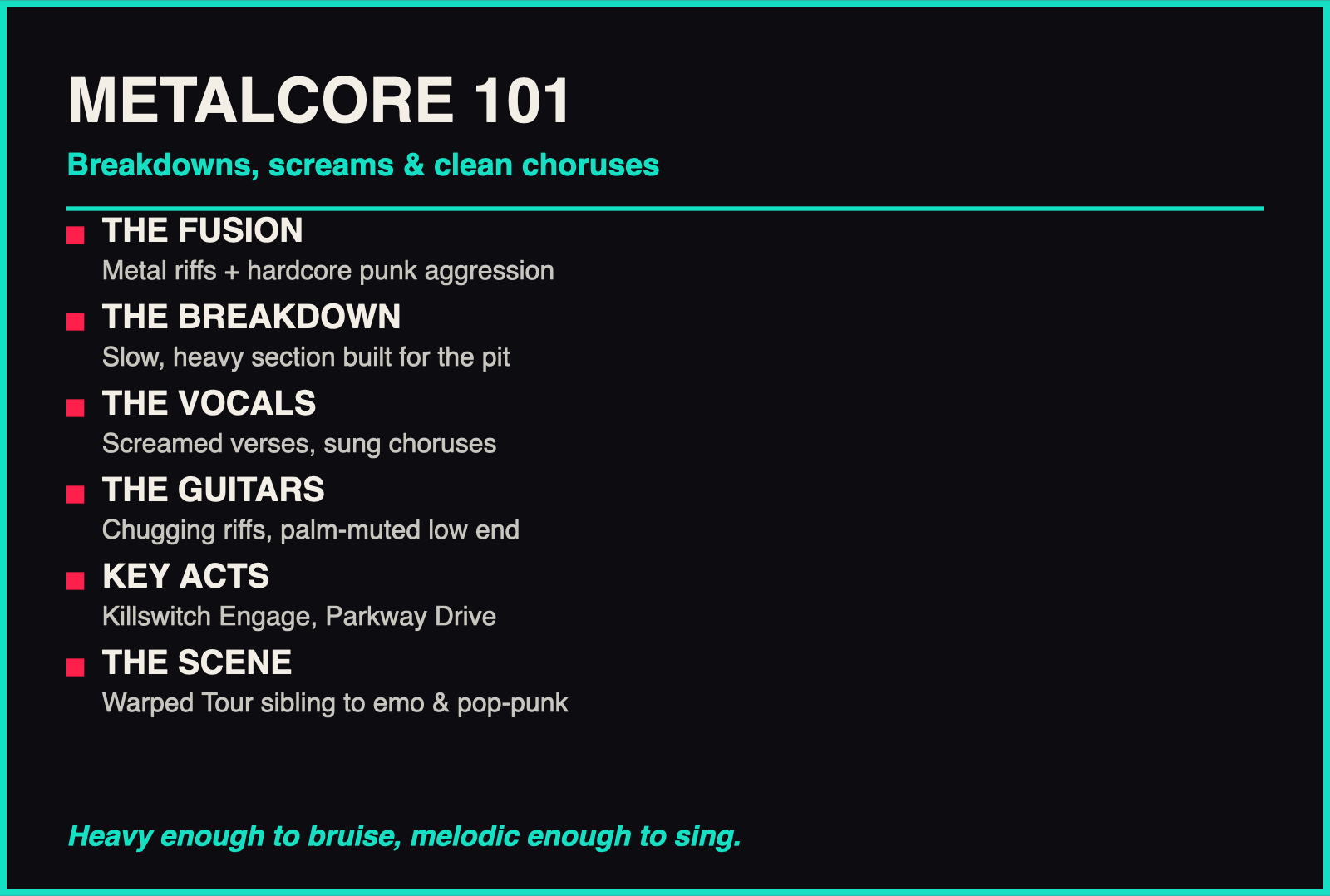
As the name suggests, metalcore fuses metal and hardcore into one sound. It borrows technical, down-tuned guitar riffs and double-bass drumming from metal, and it takes raw aggression, group energy, and the breakdown itself from hardcore punk. The result lands heavier than emo, yet it keeps the same emotional intensity and grew out of the same Warped Tour-era scene. Metalcore’s closest relatives are post-hardcore and screamo, and our comparison of post-hardcore vs screamo vs metalcore maps out where each one draws its own line.
- From metal: intricate riffs, palm-muted chugging, fast drumming.
- From hardcore: breakdowns, shouted vocals, mosh energy.
- The blend: aggression paired with melody, weight paired with hooks.
The breakdown: metalcore’s signature
The breakdown is the genre’s calling card. Picture a slow, heavy, stripped-down section, usually placed late in a song, built to land as hard as possible once the pit opens up. The whole band drops into a chugging, syncopated groove that hits like a hammer, and the tempo barely matters once that groove locks in. When people talk about metalcore, this is usually the moment they mean.
Screamed verses, sung choruses
The genre’s other signature is its vocal contrast. Verses are typically screamed or growled to carry the aggression, while choruses switch over to clean, melodic singing that carries the hook. This loud-clean dynamic made bands like Killswitch Engage both influential and unusually accessible to listeners outside the heavy-music world.
| Band | Era | Why they matter |
|---|---|---|
| Killswitch Engage | Early 2000s | Defined melodic metalcore |
| As I Lay Dying | Mid-2000s | Pushed technical aggression |
| Parkway Drive | 2000s-present | Took metalcore to arenas |
| Bring Me the Horizon | 2000s-present | Evolved metalcore into the mainstream |
Metalcore today
Metalcore keeps growing, and the numbers back up rock’s staying power. Luminate’s 2024 Year-End Music Report showed rock remained one of the most-consumed genres in the United States, with the hard-rock and metalcore corner of it holding a devoted, highly engaged fan base. RIAA figures put streaming at roughly 84% of U.S. recorded-music revenue in 2023, and metalcore’s loyal listeners stream enough to keep the genre commercially healthy. Several bands from this scene now headline major festival stages around the world.
Many metalcore acts share bills and fans with the heavier emo bands. To see how those scenes connect, our roundup of the essential emo bands includes acts that flirt with metalcore’s intensity, and you can track scene news like a lineup change at a heavy band as it happens.
Frequently asked questions
What is the difference between metalcore and metal?
Metalcore fuses metal with hardcore punk, so it carries breakdowns, a shouted-to-sung vocal contrast, and a strong scene culture built around live shows. Traditional metal genres usually stick to different vocal styles, song structures, and themes, and skip that hardcore breakdown.
What is a breakdown?
A breakdown is a slow, heavy, simplified section of a song, usually built on chugging guitar and pounding drums, designed to create maximum impact and energy in the mosh pit. It is metalcore’s signature feature.
Is metalcore related to emo?
They are scene siblings. Both grew out of punk and shared the Warped Tour era and the same touring circuits. Metalcore runs heavier and more aggressive, but the two genres still overlap in audience and culture.
Who started metalcore?
Metalcore emerged in the 1990s from bands blending metal and hardcore, and it was popularized in the early 2000s by acts like Killswitch Engage, who brought melody and clean choruses into the heavy sound.
Metalcore’s place in the scene
Metalcore sits at the heavier end of the emo and pop-punk family: metal riffs, hardcore aggression, and that steep drop from screaming straight into a clean, sung hook. Fans who want more weight without leaving the scene behind usually land here first. Our guides to the emo subculture and the greatest emo songs cover the softer side of the same circuit, and the genre’s more technical cousin gets its own space in our explainer on math rock.